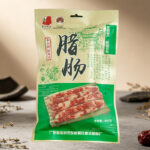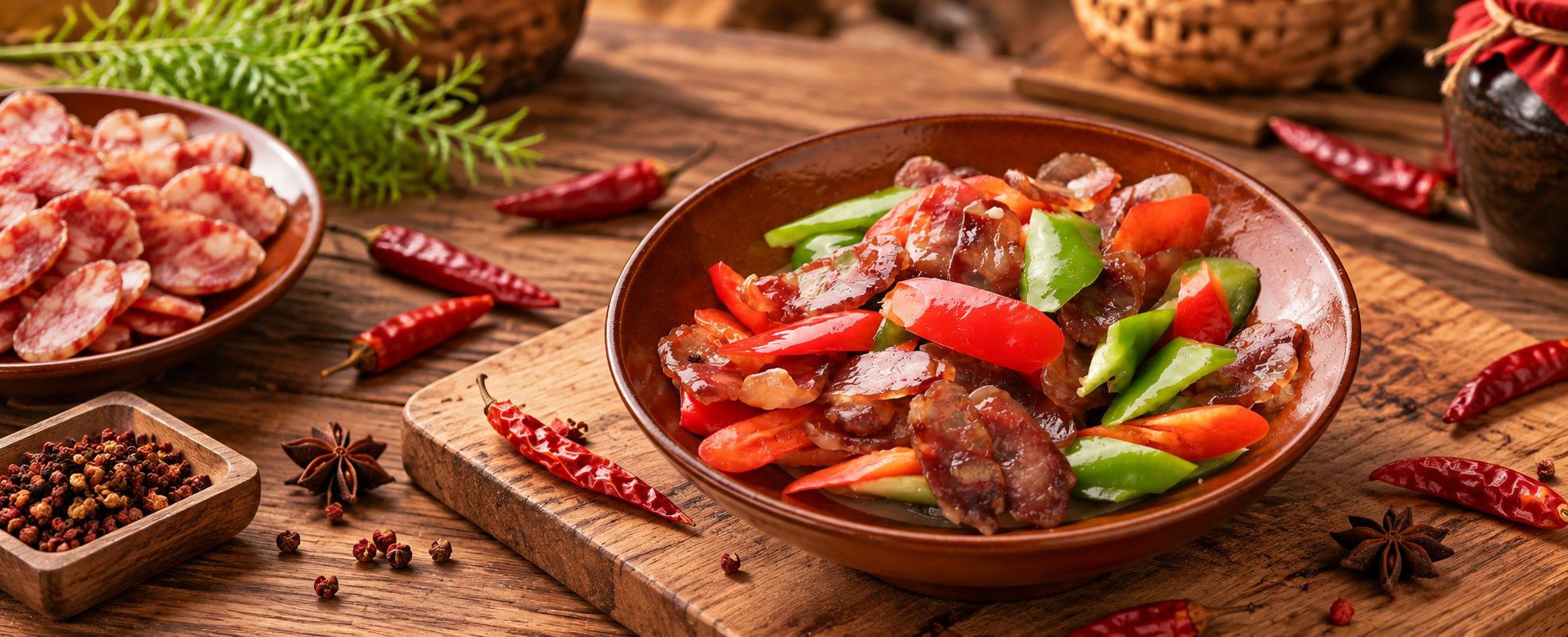
Cantonese sausage — lap cheong — is the shortcut every Cantonese home cook keeps in the cupboard. It brings sweetness, savoury depth and a gloss of rendered fat to whatever it touches, which makes it the natural partner for something crisp and mild like bell peppers.
This is the way we cook it at home in Lianzhou: fifteen minutes, one wok, ingredients you can find in any supermarket. It makes a good weeknight dinner with steamed rice, and it is also the simplest way for a buyer to judge the difference between a well-made lap cheong and a cheap one.
Why lap cheong works in a quick stir-fry
A good Cantonese sausage is roughly two parts lean pork to one part back fat, seasoned with salt, sugar, light soy and rose wine, then air-dried rather than cooked. That means it is dense, slightly sweet and already full of flavour — so it seasons the whole dish as it fries.
The trick is to let the fat render slowly enough that it coats the peppers instead of burning. If you cut the sausage on a sharp bias into thin slices, you get more surface area to brown and a much better texture than thick coins.
Ingredients (serves 3–4)
- 2 links of Cantonese lap cheong, about 120 g, sliced on the bias
- 2 medium bell peppers — red and green if you want the colour contrast — cut into 3 cm pieces
- 3 cloves garlic, sliced
- 1 small thumb of ginger, julienned
- 1 small onion, cut into wedges
- 1 tablespoon light soy sauce
- 1 teaspoon oyster sauce (optional, for a rounder finish)
- 1 teaspoon Shaoxing wine
- 1 teaspoon sugar, only if your sausage is on the dry side
- 2 tablespoons neutral oil, or 1 tablespoon if your wok is well seasoned
- Steamed jasmine rice, to serve
Method
- Bring a small pan of water to a gentle simmer, drop in the sausages and blanch for 3 minutes, then drain and pat dry. This softens the casing and washes off the surface oil that would otherwise scorch in the wok. Skip this step if you are using vacuum-packed sausage that has just come out of the fridge and feels pliable.
- Heat the wok over medium heat until a drop of water skitters across the surface. Add the oil, then the sausage slices in a single layer. Let them sit for 60–90 seconds before moving them, so the edges caramelise.
- Toss the sausage for another minute until the fat turns translucent and the kitchen smells sweet, then push it to one side of the wok.
- Add the garlic, ginger and onion to the fat that has rendered out. Stir for 30 seconds — you want them fragrant, not coloured.
- Turn the heat to high, add the peppers and stir-fry for 2 minutes. They should still squeak when you bite them.
- Splash the Shaoxing wine around the rim of the wok, then add the soy and oyster sauce. Toss everything together for 30 seconds, taste, and add the sugar only if the dish needs it.
- Serve immediately over steamed rice. The dish keeps for two days refrigerated, but the peppers will soften, so it is best eaten straight away.
The sausage is already seasoned, so the only thing that can ruin this dish is adding too much soy at the end. Taste before you season, not after.
Three details that make the difference
1. Slice on the bias, not straight down
A diagonal cut gives you an oval slice with more surface area than a round coin. More surface means more caramelisation, and caramelisation is where the sweetness of the sausage comes from.
2. Keep the peppers under-cooked
Bell peppers go from crisp to limp in about ninety seconds. Take them off the heat while they still have a bite; the residual heat of the wok will finish them as you plate.
3. Use the rendered fat
Do not pour the fat away. The aromatics cook best in it, and it carries the rose wine and soy into the peppers. If your sausage is very fatty, spoon off only the excess.
What to serve with it
Plain jasmine rice is the classic pairing, but the dish also works over thin egg noodles tossed with a little sesame oil, or folded through a bowl of congee for breakfast. For a fuller table, add a plate of steamed greens — choy sum with garlic and a pinch of salt — and something pickled to cut the richness.
Buying lap cheong for a restaurant or retail pack
The sausage makes or breaks the dish. Look for a firm link with visible fat marbling, a clean natural casing and a scent of rose wine rather than raw pork. Ours is seasoned by hand and air-dried in the courtyard in Lianzhou, then vacuum-packed for export in retail packs or bulk cartons.
If you are sourcing for a restaurant menu or a retail range, have a look at our traditional Cantonese lap cheong, or send us a note through the contact page with the volumes and pack formats you need. Sample orders are available before you commit to a container, and our FAQ covers MOQ, shelf life and shipping.